Showing posts with label Shakespeare. Show all posts

Monday, December 19, 2011

Titus Andronicus

For me, the most memorable line from Titus Andronicus is the one that sets the horrific events in motion, hissed by Tamora, Queen of the Goths, in Act I:


I'll find a day to massacre them all
And raze their faction and their family,
The cruel father and his traitorous sons,
To whom I sued for my dear son's life,
And make them know what 'tis to let a queen
Kneel in the streets and beg for grace in vain.


Picture from the NYT review, here.
The Public Theater’s current production of Titus Andronicus takes an almost playful spin on the massacre that follows.  More than anything else, it seemed like the sort of visual spin Tim Burton would have put on the gory play—gothic, visually riveting and disgusting, a bit campy, and overall playful.  So, by the time Tamora tries her meatpie (with her own sons cooked in), most of the audience was ready to laugh (cathartically, one hopes).  Which isn't to say that there aren't many moments of collective gasps.


Wednesday, November 30, 2011

Henry V


Continuing my autumnal romp through Shakespeare, I saw Henry V at the Irondale Center in Brooklyn last night (performances continue through Dec. 10, 2011).  Only 10 actors performed over 40 roles (47 according to the playbill).  Perhaps this accounts somewhat for the liveliness that the play afforded, streamlining the otherwise heavy drama into crisp encounters and exchanges.  The most memorable scene, for me, was the bilingual punning conversation in which the French princess Katherine blushes and giggles at the wordplay of “foot” and “coat.”  When even such a potentially leaden scene as that, which I only half understand, is performed with such gusto, it makes for a very enjoyable two hours.   

Sunday, November 27, 2011

Richard II

 The Pearl Theater Company’s Richard II at the New York City Center Stage has one thing to recommend it: Sean McNall as Richard II.  Fortunately, he’s the lead and he gets a lot of stage time.  Every line he delivers is powerful, clear and stately and wild at once; his bearing is never overdone, his expressions regal and tearful and amused.  Brilliant work.

Unfortunately, with a play that runs nearly three hours long, Richard II can’t be on stage the entire time, even if it is named for him.  And yes, this is a straight-forward rendition of the play, one which neither skips a line nor feels any need to add much in terms of direction.  The acting was solid throughout, but the blocking was hokey, the set a Hallmark vision of “desolate,” the wardrobes atrocious—aviator jackets and black jeans over the most proppity-prop-prop props on the Middle Ages, I swear the crown was cardboard painted gold. 

Richard II on the left, Bolingbroke on the right, and that's Harry Percy sportin' the aviator look in the background.  Harry's skirt looks like wallpaper, by the way, and that crown looks like an unimaginative ten year old made it.  Image courtesy of the New York Times review, here.
Probably the worst offense was a soundtrack of cheesy ass New Age renaissance music that would play between scenes, rife with the murmuring of the commoners if the scene called for such a thing (murmermurmermur), and played as background music to lend a sense of bathos to Richard’s brilliantly rendered pathos.         

Tuesday, November 22, 2011

Cymbeline

Cymbeline has got a little of everything.  It’s got War, it’s got True Love, it’s got the Girl Disguised as Guy, the Princes Raised as Woodsmen, it’s got the Wicked Stepmother, it’s got the Apparently Dead Person Who is Really Just Asleep (think Romeo and Juliet).  What sets it apart from a lot of Shakespeare’s work is that it doesn’t have the incessant wit, the wild turn of phrase that at once seems impossibly wrong and indubitably right, that forces us to see the world in new light.  No, the dialogue here is rather prosaic in comparison to most of the comedies, or any of the plays with a fool (even Hamlet-as-Fool, as much as Lear-as-Fool—though Lear has his own fool, of course). 

It’s just this prosaic dialogue that Fiasco’s Theater rendition of Cymbeline, which I saw Sunday night (door tickets are $37.50) at Barrow St. Theater, does so much with.  At those moments of mediocrity that creep up throughout this play, the directors have chosen to make their characters a touch on parodic side—which is to say nerdy/geeky side of things (except in the case when they’re more like idiots).  It works remarkably well.  For example, in Act I, Scene I, when two lovers are forced to part, one gives the other a bracelet and calls it a “manacle of love” and puts it on his “sweetest, fairest.”  If this were Romeo, then the lines would be delivered in all earnestness, and the other version of Cymbeline I’ve heard had them delivered such.  The Fiasco Theater’s version makes the line-deliver something like an over-excited nerd.  Because, you know, calling a bracelet a “manacle of love” sans irony ain’t cool.  And they do it like this throughout, hamming it up, both in delivery of dialogue and silent reception of it.

The performance has a lot to recommend it.  The acting was superb.  Six mummers performed about twice as many parts, with minimal costume change and with maximum clarity.  The music, which was worked in during major moments of transition, was simply excellent—the cast can sing.  The space is small and intimate and I can’t imagine a better version of Cymbeline.

I don’t want it to sound like the play itself doesn’t have something to offer.  Of course, it does (just less, I’d argue, than normal for a Shakespeare play).  One of favorite lines in all of Shakespeare is in Act I, Scene IV.  I like it so much because I find it particularly enigmatic.  I’ll end this review with it, spoken by Iachimo:

….
             

Thursday, November 3, 2011

Love's Labour's Lost

I saw this play performed for the third time last night.  It was one of the best all around performances of any Shakespeare that I've ever seen.  It was here, on the Public Lab stage of at the Public Theater. 

Everything was well done: good acting, strong characters, strongly delivered lines, great physical deliveries, variety and simplicity in wardrobes and stage design.  One thing that set this performance off for me, though, was the physical, silent acting that was going on while other characters were delivering their lines.  That's hard to describe.  Suffice it to say that despite, what, only 10 short lines or so of dialogue, Stephanie DiMaggio's wench Jaquenetta is larger than Sam Waterson's Lear.  

Friday, October 21, 2011

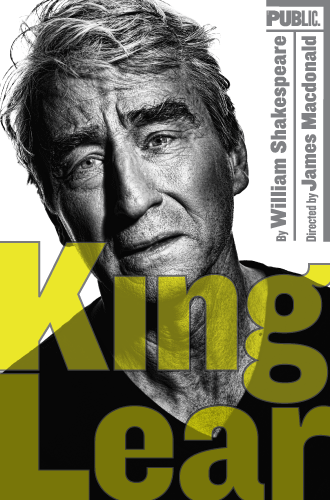
King Lear

At the Public Theater on Wednesday night I saw Sam Waterson as King Lear and Bill Irwin as his fool. 

What an amazingly bleak play.  Has meaninglessness ever been so heart wrenching and beautiful? 

Irwin nailed the fool.  I can't imagine a creepier, weirder, and wiser performance.  The fool seems the linchpin in King Lear, in which the only redeeming value is madness, and that's a mad redemption.  On that note, one of my favorite lines is delivered by Lear, "When we are born, we cry that we come to this great stage of fools: This' a good block."

Kelli O'Hara played Regan.  Kelli O'Hare is from Oklahoma.  According to Rich (with whom I saw the play), her talent will resuscitate musical theater.  Go team OK!